
Our MUST DOs:
OUR FUNDAMENTAL RULES FOR COOKING RANDALL LINEBACK
Grass fed heritage beef is DIFFERENT than grain-fed conventional beef. Randall Lineback lacks the unhealthy intramuscular fat that helps insulate conventional cuts from high heat. So be gentle, lower the heat a bit, and read our how to's below.
_____________________

THAW PROPERLY
Thaw your Randall Lineback slowly, in the refrigerator (don’t forget to put a plate under it in case of leakage). Proper thawing helps it retain moisture and keeps the muscle fibers flexible.
BRING TO ROOM TEMPERATURE
Always bring Randall Lineback to room temperature before cooking. The more dramatic the temperature change, the more muscle fibers react (i.e. toughening the cut), so bringing your meat to room temperature will help it maintain tenderness.
ADJUST YOUR ROASTING TEMPERATURE:
Lower a standard recipe’s temperature 10-15% (about 45-50˚). Grass fed beef cooks more quickly than grain fed beef.
ADJUST YOUR GRILLING/SEARING TEMPERATURES:
We suggest that you do a medium-high temperature sear quickly on all sides, then finish cooking at a low temperature to maintain tenderness. This applies to sous vide and sear preparations, stovetop-to-low-oven preparations.
DONENESS - AIM FOR NO MORE THAN MEDIUM:
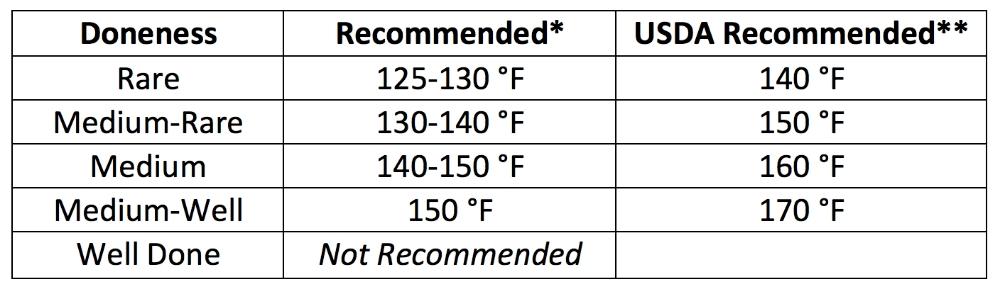
Don’t overcook! Use a meat thermometer to check doneness. Subtract 10˚ from a standard recipe’s recommended “doneness” (for instance, we use 130˚F rather than the USDA’s 140˚F as our medium rare marker). The internal temperature will rise about 5˚ while the meat rests.
*Note: If you are using an oven, the meat’s internal temperature will continue to rise by about 5°F once you remove it from the heat.
**Note: The USDA generally uses higher internal temperatures than those preferred by home and professional chefs.
SLOW COOKING? KEEP IT SAUCY
For any slow-cooking cut, consider adding moisture to the bottom of the pan to help keep things from drying out. For pot roasts and slow-cooker cuts like osso buco, cooking in sauce will help maintain moisture.
Plus, the acid from saucy things like tomatoes and wine helps break down the muscle fibers. Pot roasts (often cut from muscle groups that risk drying out) can also be shredded once cooked through to make delicious stews.
REST YOUR MEAT:
This is KEY and helps the meat reabsorb its juices. Tent your cooked product with foil and let rest for 5-10 minutes after cooking. Otherwise when you cut it, all the delicious juiciness will come flowing out!
THIN CUT & ACROSS THE GRAIN:
Cut your meat thinly and across the grain to increase tenderness! This can make all the difference for cuts like bavette and skirt steak, where cutting across the meat’s pronounced grain ensures a truly tender bite.